
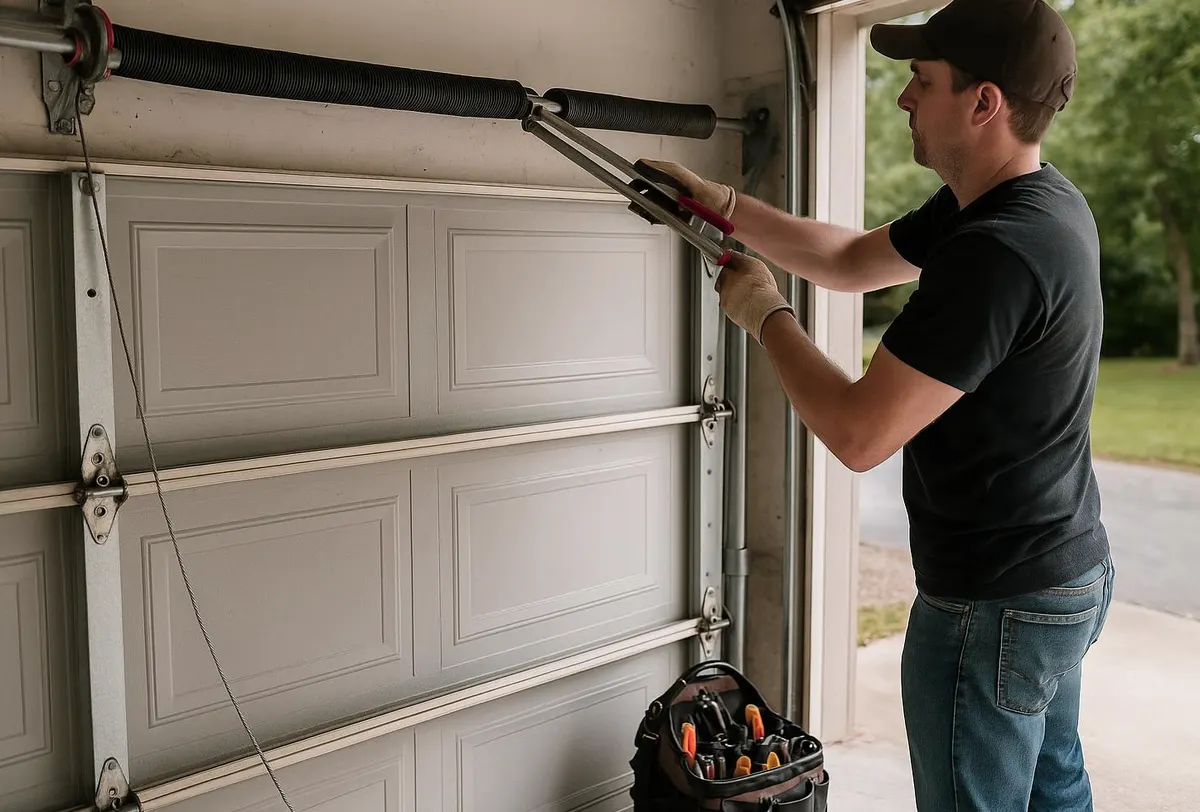
Rule of thumb: lubricate the moving metal parts of your garage door twice a year with a light silicone or lithium-based spray, and never the tracks. The exceptions matter if you're on the Emerald Coast: homes closer to the water deal with salt air that speeds up corrosion, and the humidity here means parts that would stay dry elsewhere can start to squeal or stick within a few months. If your door fronts open water or you run the AC hard against constant moisture, plan on checking hardware every three to four months instead of waiting for the twice-a-year mark.
Tools You'll Need
- A silicone-based garage door lubricant or white lithium grease spray
- A clean microfiber rag
- A soft-bristle brush (an old toothbrush works)
- A step stool or ladder
- Work gloves
- A flashlight to check tracks and hinges closely
Step-by-Step: Lubricating Your Garage Door
- Close the door and disconnect the opener. Pull the red release handle so the door is fully manual while you work. This keeps the opener from engaging mid-task.
- Wipe down every part before you spray anything. Salt residue and humidity grit build up fast near the coast and will turn lubricant into a gritty paste if you spray over it. Use the rag and brush to clear debris from hinges, rollers, and the spring coils.
- Lubricate the hinges. Spray a light coat on each hinge where the metal pivots, then work the door up and down by hand a few times so it works into the joint.
- Lubricate the roller stems and bearings — not the wheels themselves. If you have nylon rollers, you only need to hit the metal stem and bearing; the nylon wheel doesn't need product and can get slippery with too much spray.
- Apply a light coat to the torsion spring coils. A quick pass of silicone spray along the length of the spring cuts down on the metal-on-metal grinding sound. Do not try to adjust, stretch, or remove the spring itself — that's where this job stops being a homeworner task.
- Lubricate the opener's chain or screw-drive rail. Check your owner's manual for what it calls for; chain-drive units usually want a bike-chain-style lube, while screw-drive rails often want a specific grease sold with the unit.
- Wipe the tracks clean but leave them dry. Tracks guide the rollers; they don't need lubrication, and grease on the track actually attracts dust and grit that make the door run rougher, not smoother.
- Reconnect the opener and run the door through a full cycle. Listen for any remaining grinding, squealing, or hesitation, and wipe off any excess lubricant that dripped onto the floor or weatherstripping.
What to Use, What to Avoid
- Use: silicone-based garage door spray or white lithium grease — both hold up well in humidity and don't gum up with dust.
- Avoid: WD-40 as a long-term lubricant. It's a solvent and water-displacer, good for loosening a stuck bolt, but it evaporates fast and leaves parts drier than before within weeks.
- Avoid: thick automotive grease on rollers or tracks — it attracts grit and salt air debris, turning into a gritty paste that wears hinges faster.
- Avoid: spraying lubricant anywhere near the photo-eye sensors or weatherstripping; it can smear the sensor lenses or make rubber seals swell and crack faster in the heat.
What a Homeowner Can Handle vs. What Needs a Technician
Wiping down hardware, oiling hinges, and lubricating rollers and chains are all reasonable DIY tasks with the door disconnected and the right products on hand. Where it needs to stop: torsion springs under tension, bent track sections, frayed cables, or an opener that grinds even after lubrication. Springs store enough force to cause serious injury if they're mishandled, and a track that's slightly out of alignment can look like a lubrication problem when it's actually a structural one. If you've lubricated everything correctly and the door still binds, slips off track, or reverses unexpectedly, that's a sign something beyond routine maintenance is going on.
When to Call Mary Esther Garage Door Co
If you're hearing grinding that doesn't go away after lubrication, noticing rust forming faster than it used to on hinges or tracks, or your door feels heavier to lift than it did last year, it's worth having a technician take a look before hurricane season puts extra strain on the system. Our Garage Door Maintenance visits cover a full inspection of springs, cables, and hardware, catching corrosion from salt air before it turns into a failed spring or a door that won't seal against wind-driven rain. If a spring has already given out or a roller has jumped the track, our Spring Replacement service gets you back to a smooth, safe-operating door without the guesswork.
If your garage door is sticking, squealing, or just feels off, give Mary Esther Garage Door Co a call — we serve Mary Esther, FL and the surrounding Emerald Coast, and we're ready to help before the next storm rolls in.