
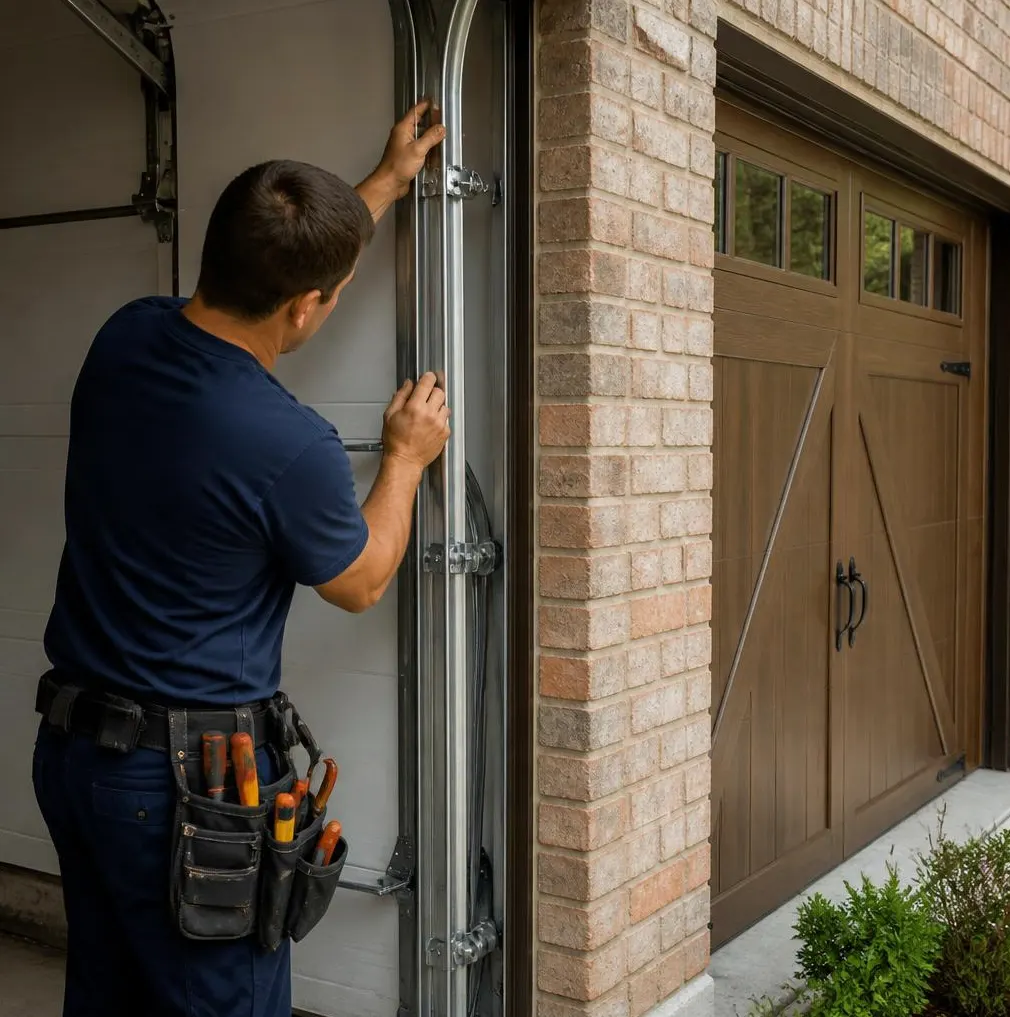
The Moment You Notice It
It usually happens on a bright afternoon. You pull into the garage, hit the button, and as the door closes you catch a thin line of daylight along the bottom edge. Or maybe it's not light, it's sand and dead leaves that have blown in overnight, or a trail of ants marching along the concrete right under the door. Sometimes it's just a draft you feel standing near the workbench, even with the door shut. All of these point to the same thing: the bottom seal, or the weatherstripping around the frame, has worn out and is no longer doing its job.
This is one of the cheapest, easiest fixes in garage door maintenance, and it's one homeowners can often handle themselves on a Saturday morning.
Why This Matters More Here
On the Emerald Coast, a gap under the door isn't just a minor annoyance. Humidity and afternoon downpours push moisture into garages constantly, and a failed seal lets water pool along the slab, which can warp stored cardboard, rust tools, and feed mold growth in a space that already stays damp much of the year. Salt air near the coast accelerates corrosion on metal tracks and hardware, so keeping water out of the garage helps more than just the door itself. And once hurricane season storms roll in with wind-driven rain, a worn seal is often the difference between a dry garage floor and an inch of standing water pushed in sideways under pressure.
Tools You'll Need
- Tape measure
- Utility knife
- Flathead screwdriver or small pry bar
- Replacement bottom seal (rubber bulb-type, sized to your track, sold by the foot or in kits)
- Replacement vinyl weatherstripping for the side and top jambs, if needed
- Soapy water or silicone spray (makes feeding the seal into the track much easier)
- Work gloves
Step-by-Step: Replacing the Bottom Seal
- Open the door fully and disconnect the opener if your door has one, so it can't cycle while you're working. If you have a torsion spring system, do not touch the spring itself, that part is never a DIY job.
- Inspect the old seal. Look for cracking, flattening, hardened rubber, or sections that have pulled out of the track entirely. If it's brittle or doesn't spring back when pressed, it's done.
- Measure the door's width at the bottom to buy the correct length of replacement seal, and check the track style, most garage doors use either a T-style or a bulb-style retainer channel, and seals aren't universal.
- Pull the old seal out of the aluminum retainer track by hand or with a flathead screwdriver if it's stuck. It usually slides out lengthwise.
- Clean the track of dirt, sand, and old rubber debris with a rag. This matters more here than in drier climates, since grit mixed with humidity can gum up the channel over time.
- Feed the new seal into the track, starting at one end and working across. A little soapy water or silicone spray on the bulb edge makes this slide in far easier than forcing it dry.
- Close the door and check the fit. The seal should compress evenly against the concrete with no visible gaps, and no spots where it's buckled or twisted.
- Check the side and top weatherstripping while you're at it. If it's cracked or pulling away from the jamb, pull the old strip, clean the surface, and press or nail in the new strip according to the product instructions.
- Reconnect the opener and run the door through a full open-close cycle to confirm it still seats properly and the seal isn't catching on the track.
What a Homeowner Can Safely Do
Replacing the bottom seal and side weatherstripping is well within reach for most homeowners with basic tools and an hour of time. It doesn't involve the spring system, the opener wiring, or any part of the door under tension, so the risk is low and the payoff, a dry garage floor and no more sand drifts, is immediate.
When It's a Job for a Technician
If the gap under the door isn't from worn rubber but from the door itself sagging, warping, or not sitting level, that's a different problem, often tied to panel damage, misaligned tracks, or a bent bottom section from a stray lawnmower or storm debris impact. Wood and steel doors that have swelled or rusted from years of coastal moisture may not close flush no matter how new the seal is. And if replacing the seal reveals worn rollers, a loose track, or an opener that's struggling to pull the door shut all the way, those point to wear that goes beyond weatherstripping.
When to Call Mary Esther Garage Door Co
If you've replaced the seal and still see gaps, or the door isn't sitting square against the frame, give us a call. Our garage door repair service handles track alignment, panel damage, and worn rollers that a new seal alone can't fix, and our garage door maintenance visits check wind-load hardware, spring tension, and track condition together, which matters heading into another hurricane season on the Emerald Coast. We also handle spring replacement and opener issues if those turn up during the inspection.
If your garage door is letting in water, sand, or bugs in Mary Esther, FL, or anywhere from Fort Walton Beach to Navarre and Destin, reach out to Mary Esther Garage Door Co and we'll get it sealed up right.